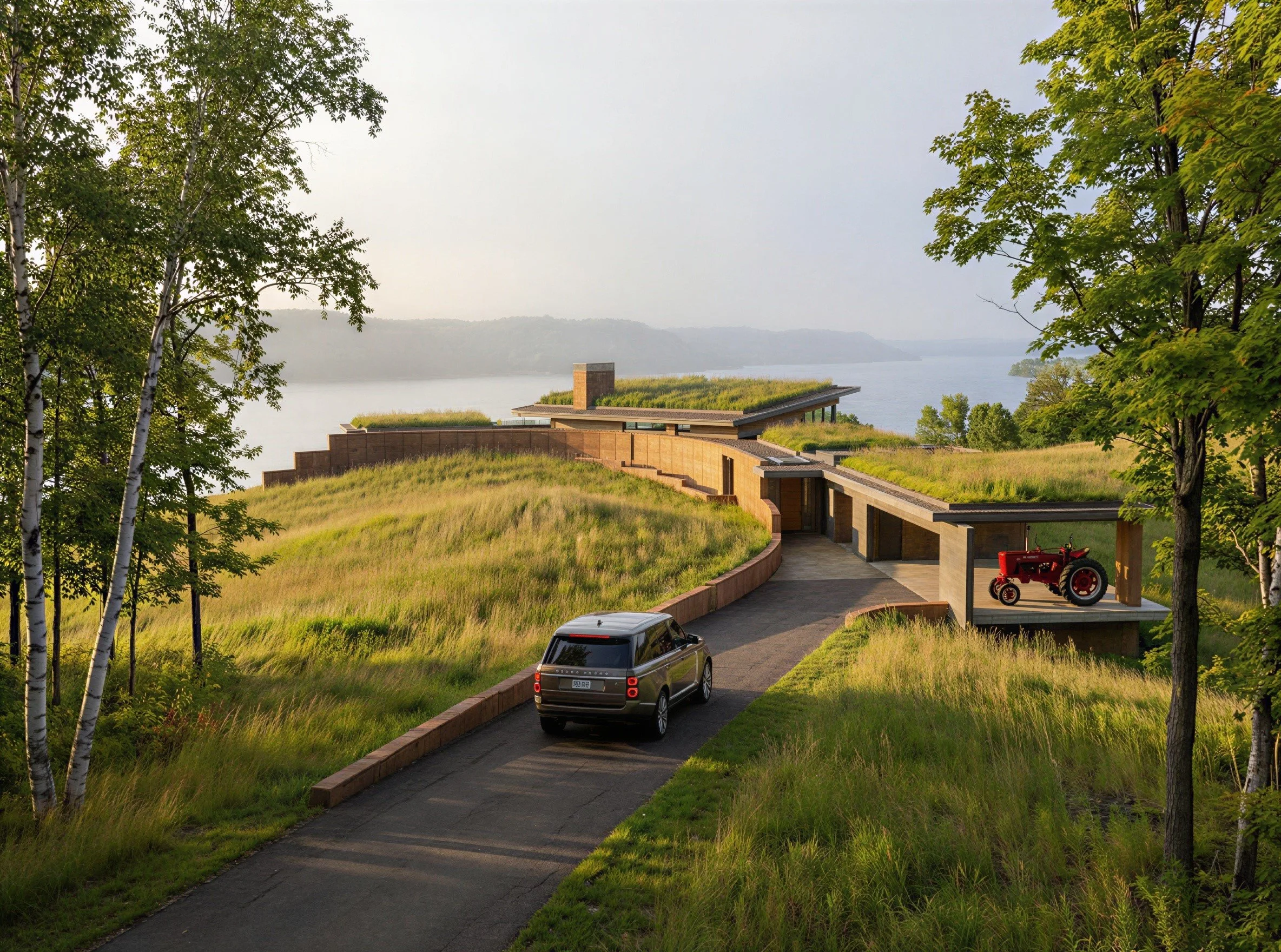
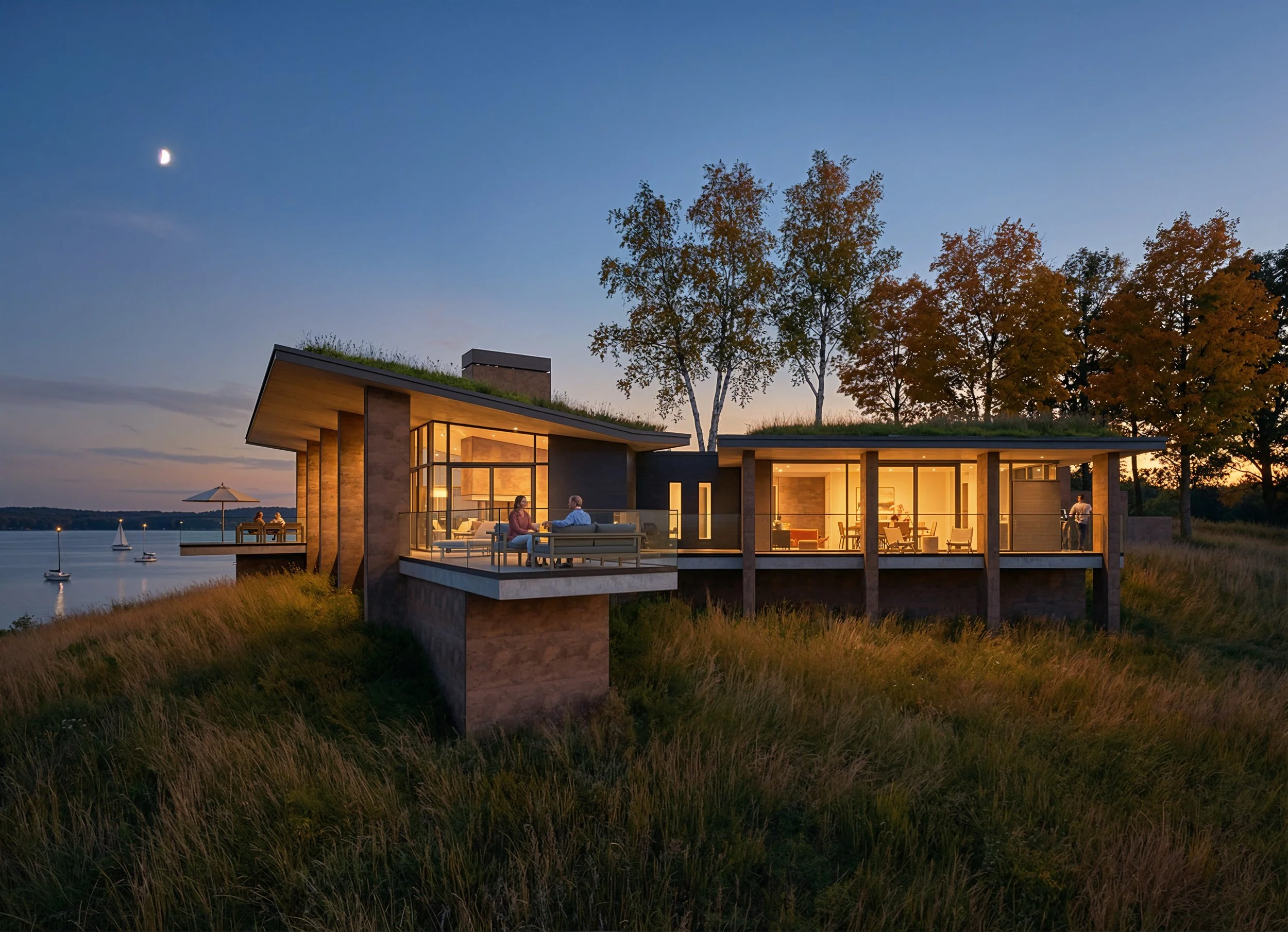
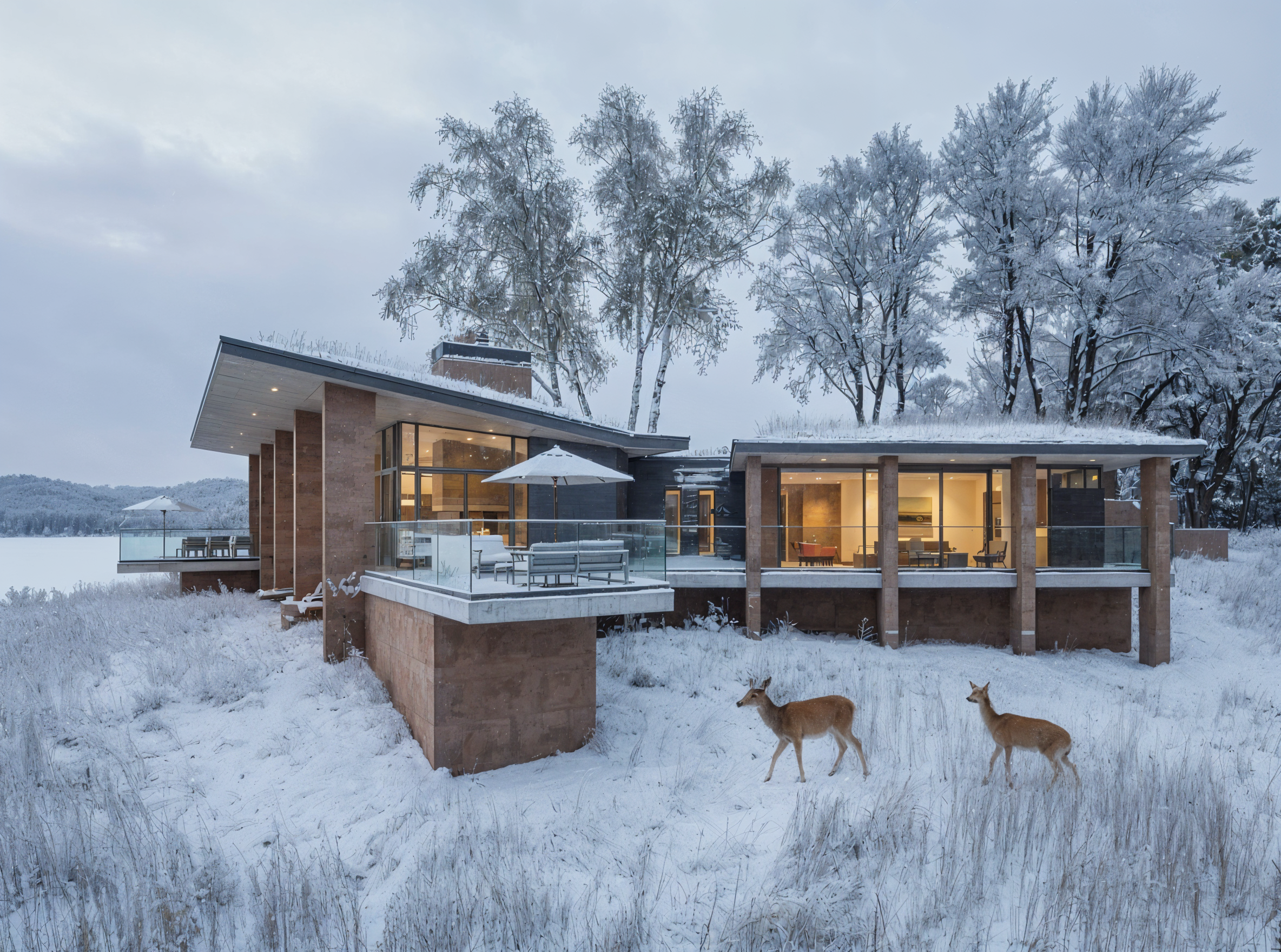
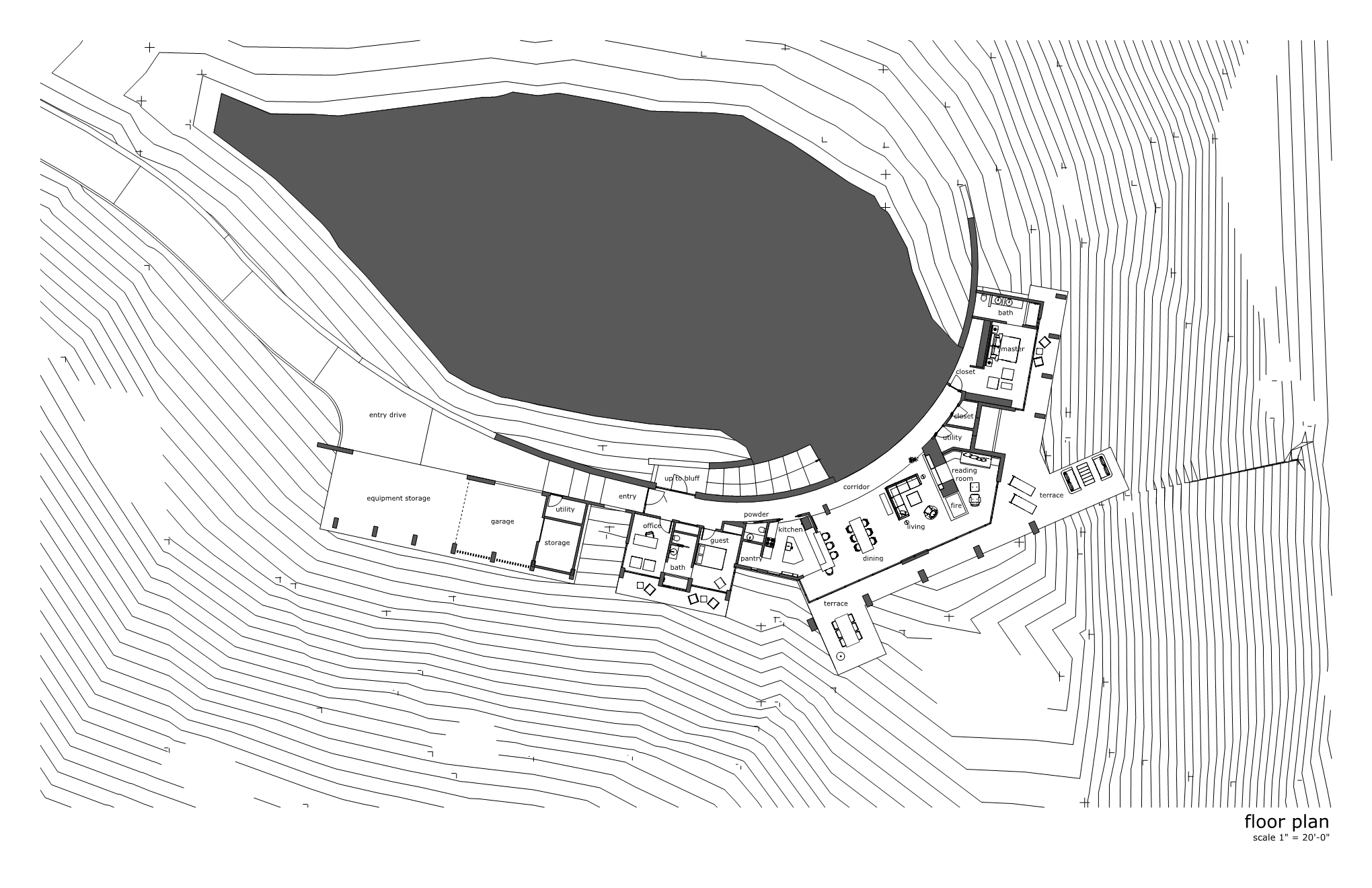
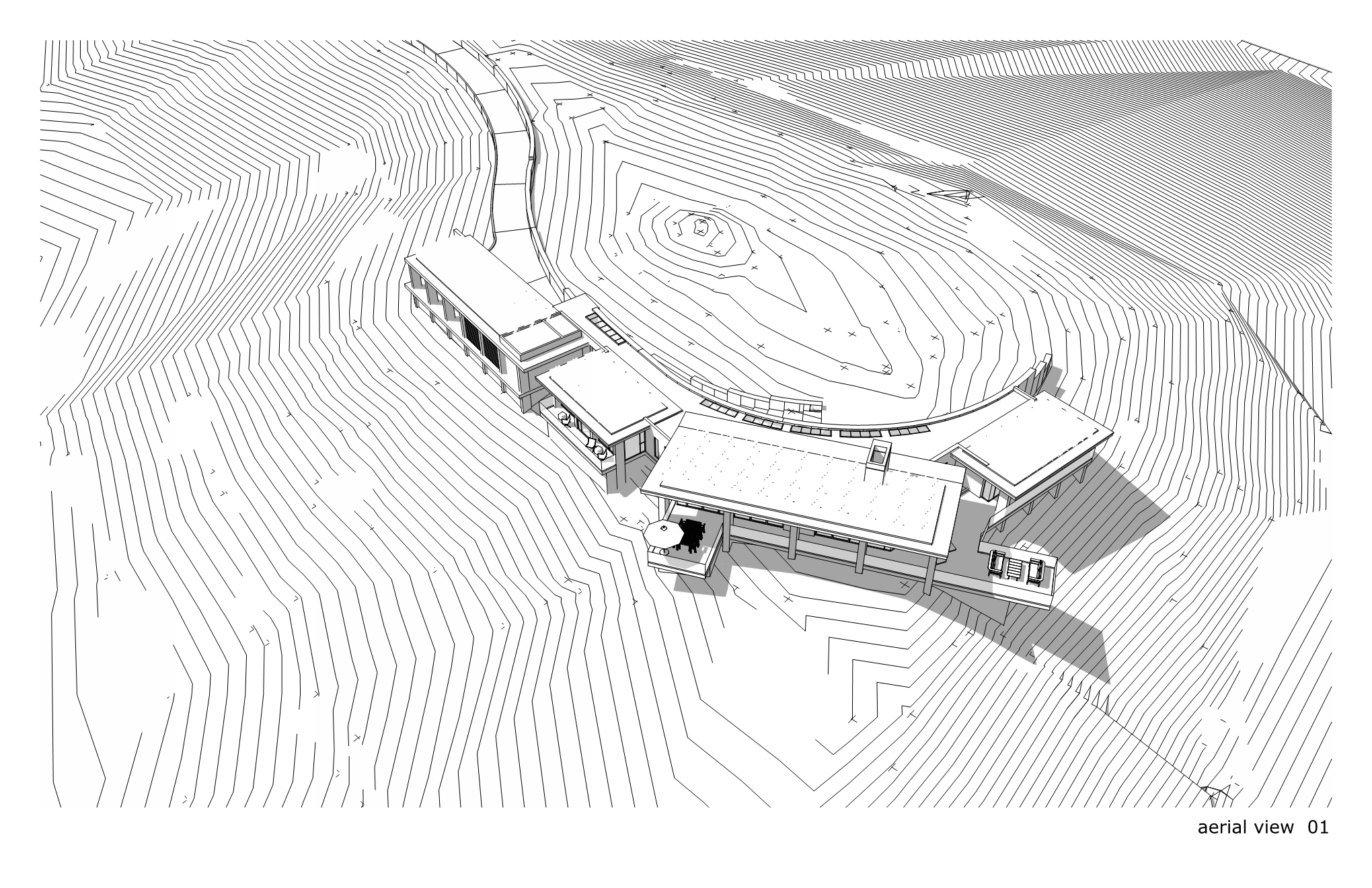
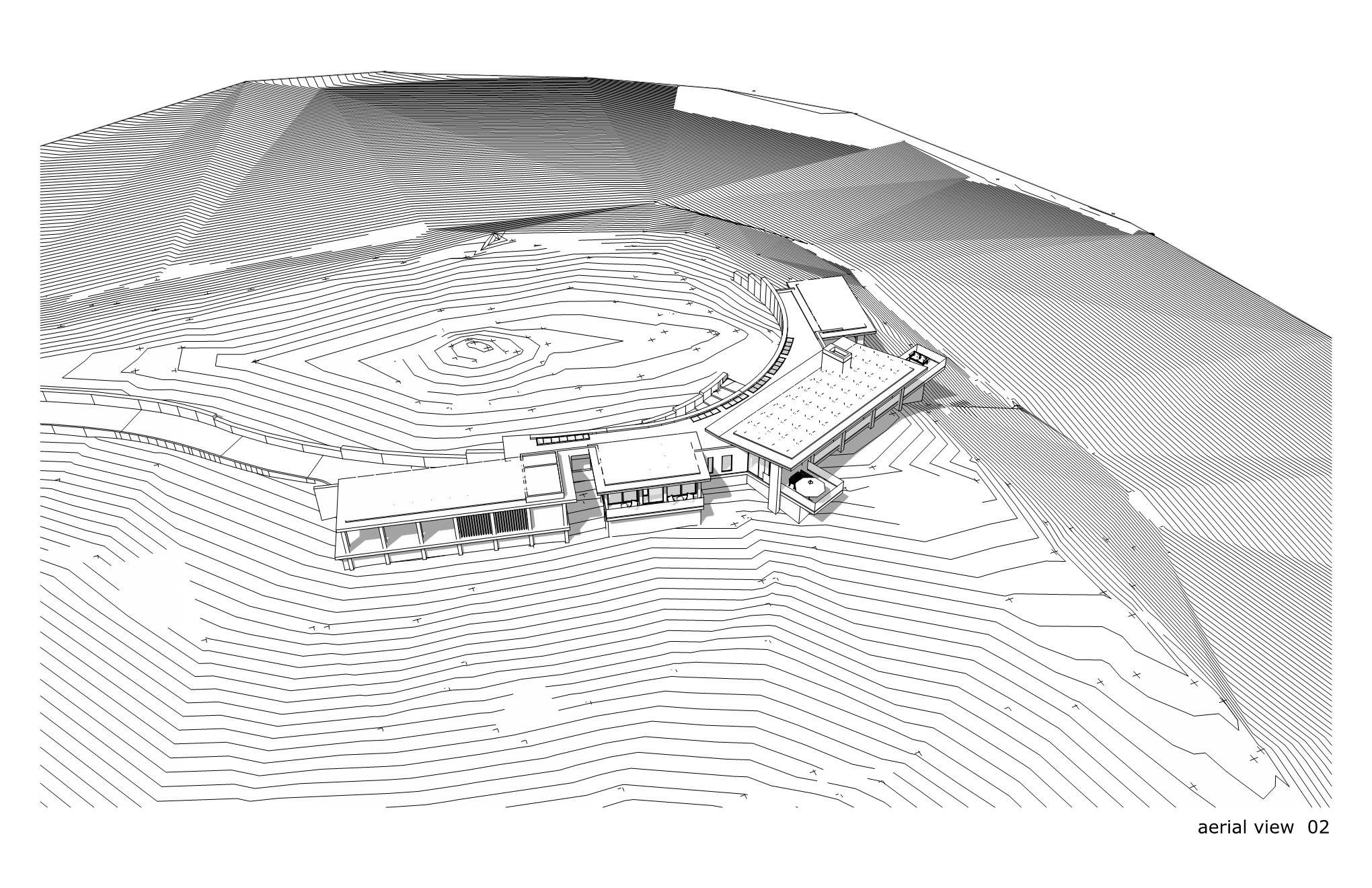
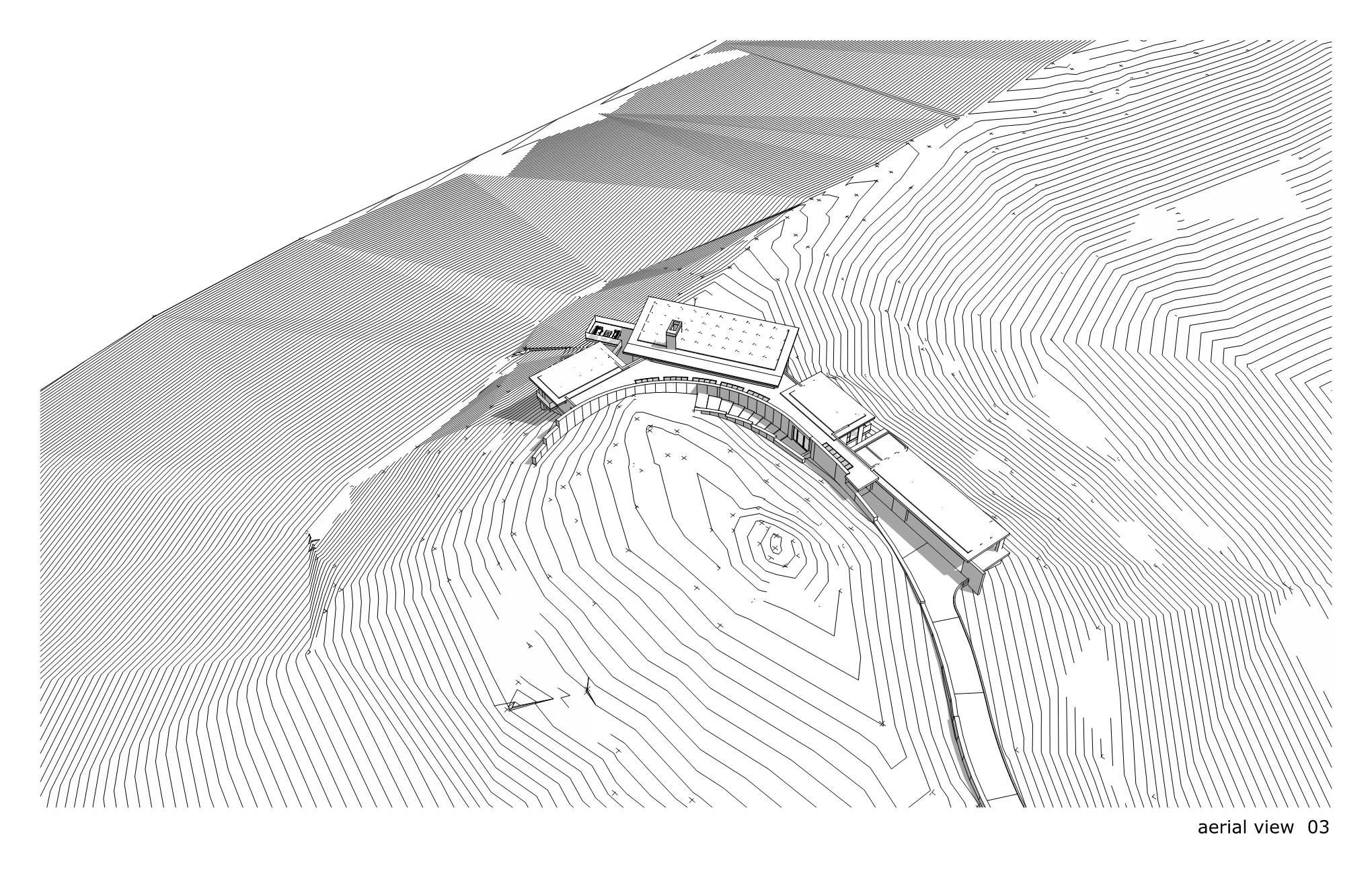
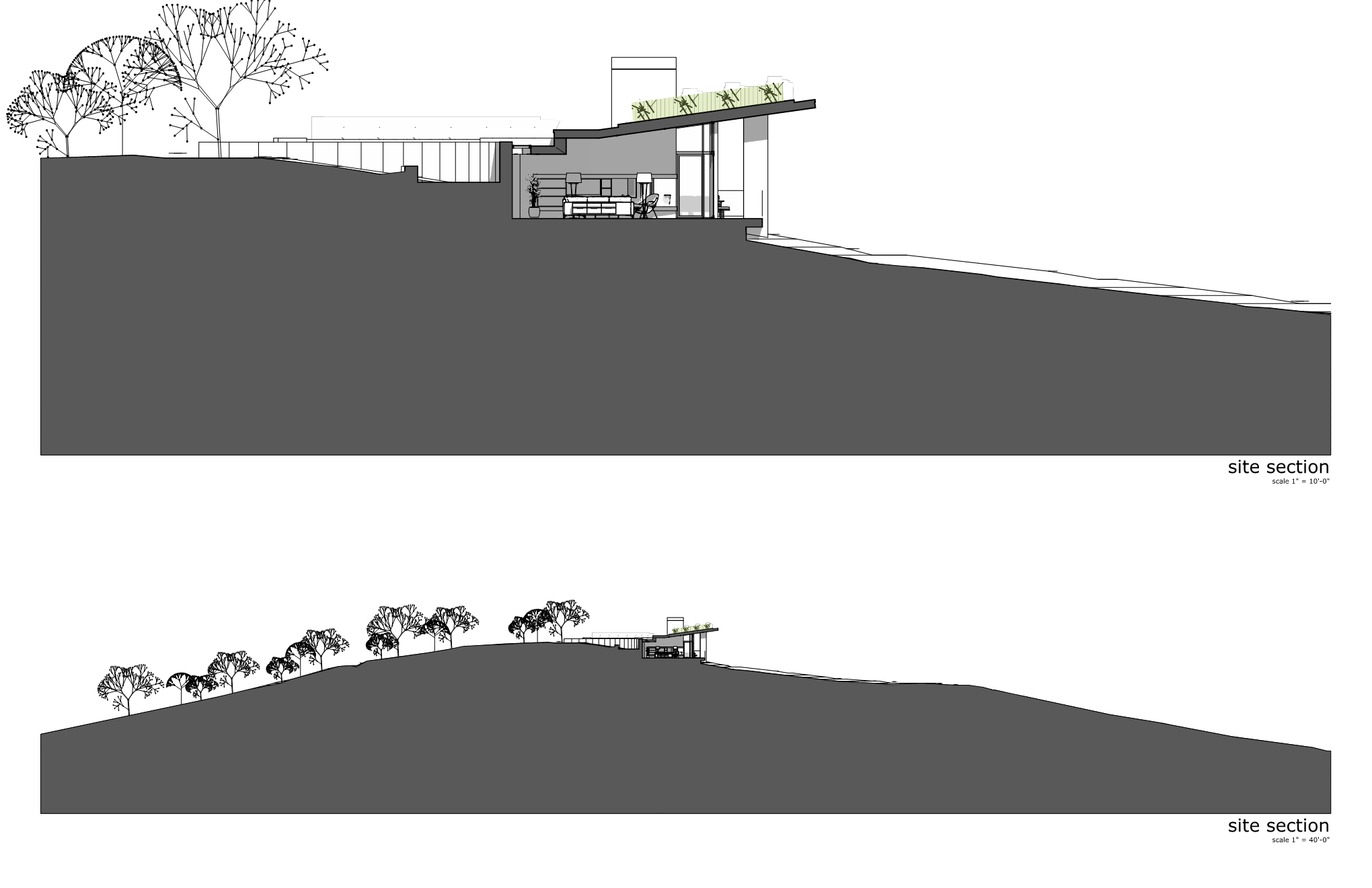
When a couple nearing retirement contacted our office to design a home for the next chapter of their lives, perched high on a bluff overlooking Lake Pepin on the Wisconsin side of the Mississippi River, we were immediately excited to take on the project. The site, however, came with important considerations. At its highest point sat an existing indigenous burial mound—common to the region—that required protection, respect, and deference. In addition, the clients had restored the native prairie grasses that predated western agricultural practices, allowing the landscape to return to its original character. Together, these elements became key organizing principles for both the placement and design of the home.
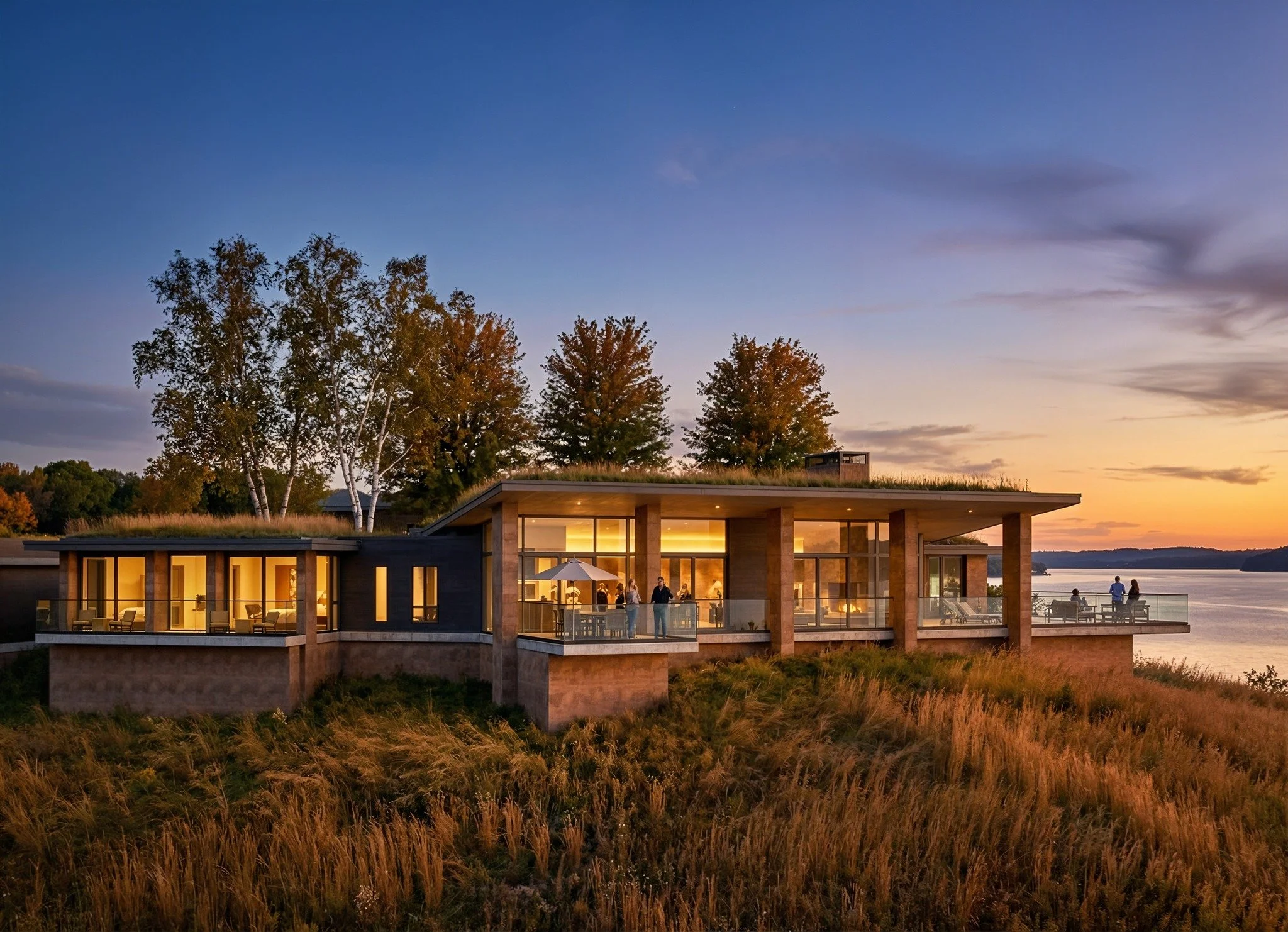
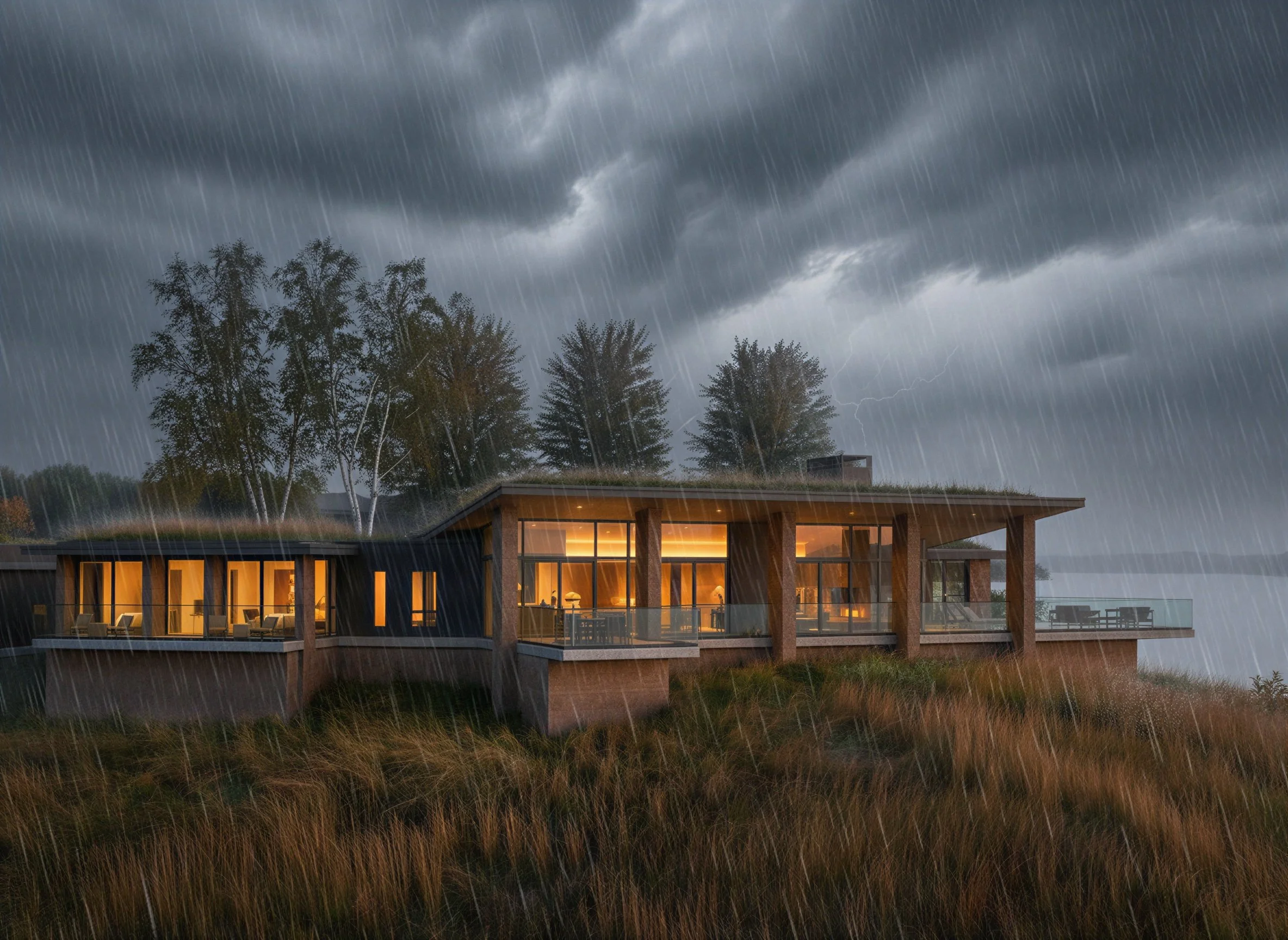
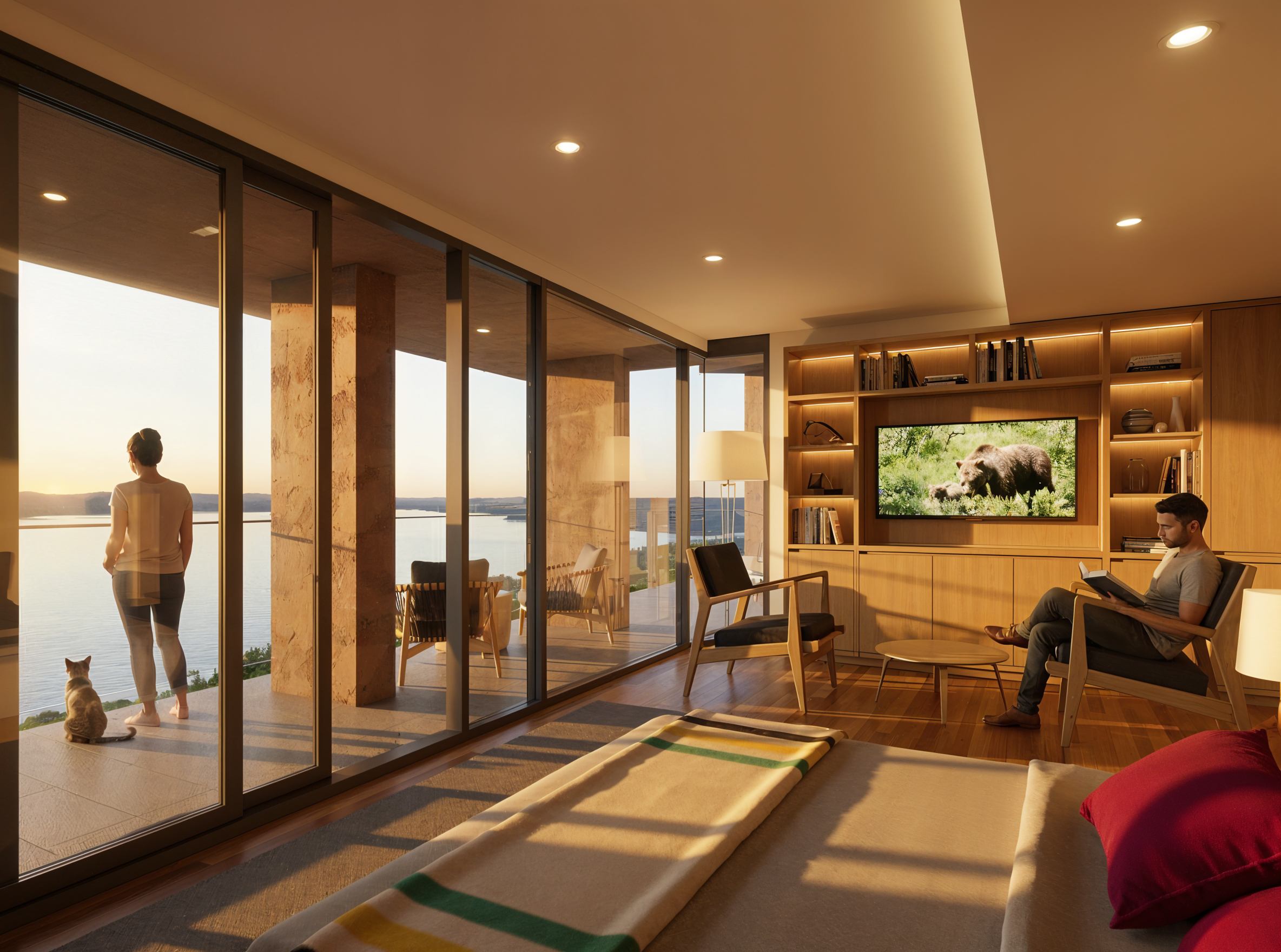
The couple was drawn to the expansive lake views and had a clear vision for how those views should be experienced from each space within the house. Maximizing this connection to the landscape guided the organization of the interior program. Considerations such as sun exposure, natural daylight, seasonal heat gain, and cooling played an integral role in shaping the overall form. Early in the design process, the decision was made to push the home’s footprint into the earth—both to honor the sacred nature of the site’s peak and to take advantage of the natural insulating properties of the ground.
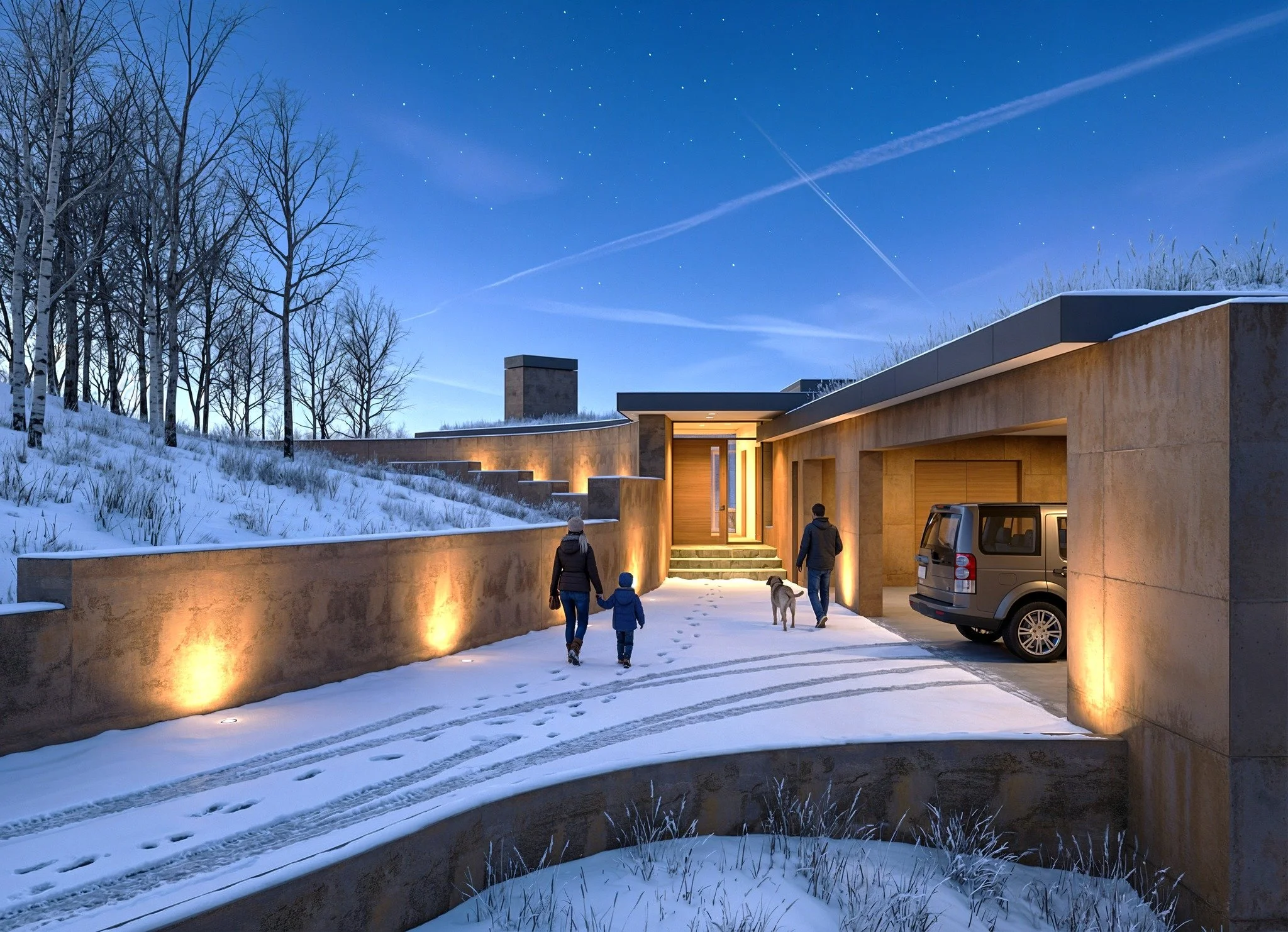
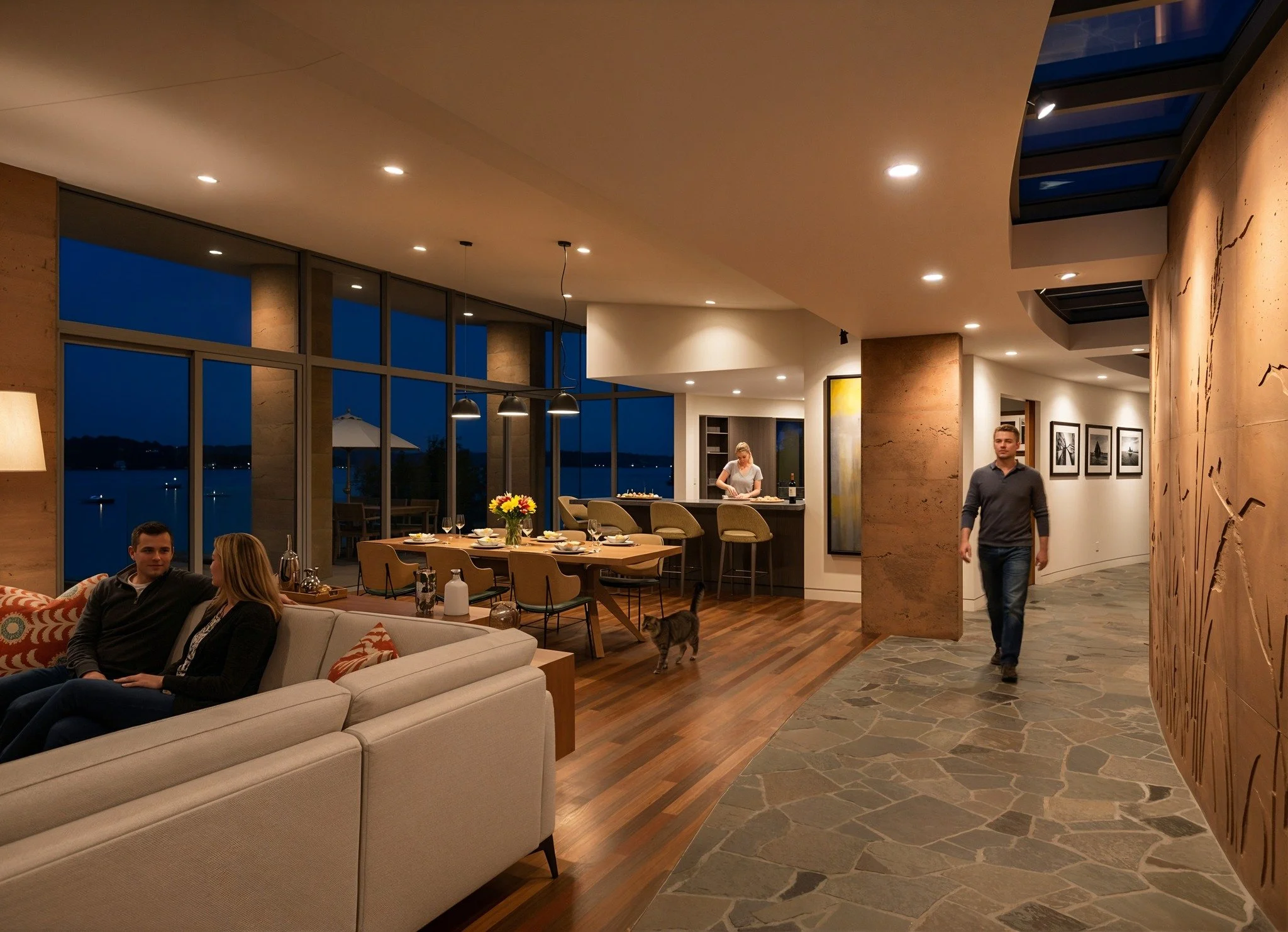
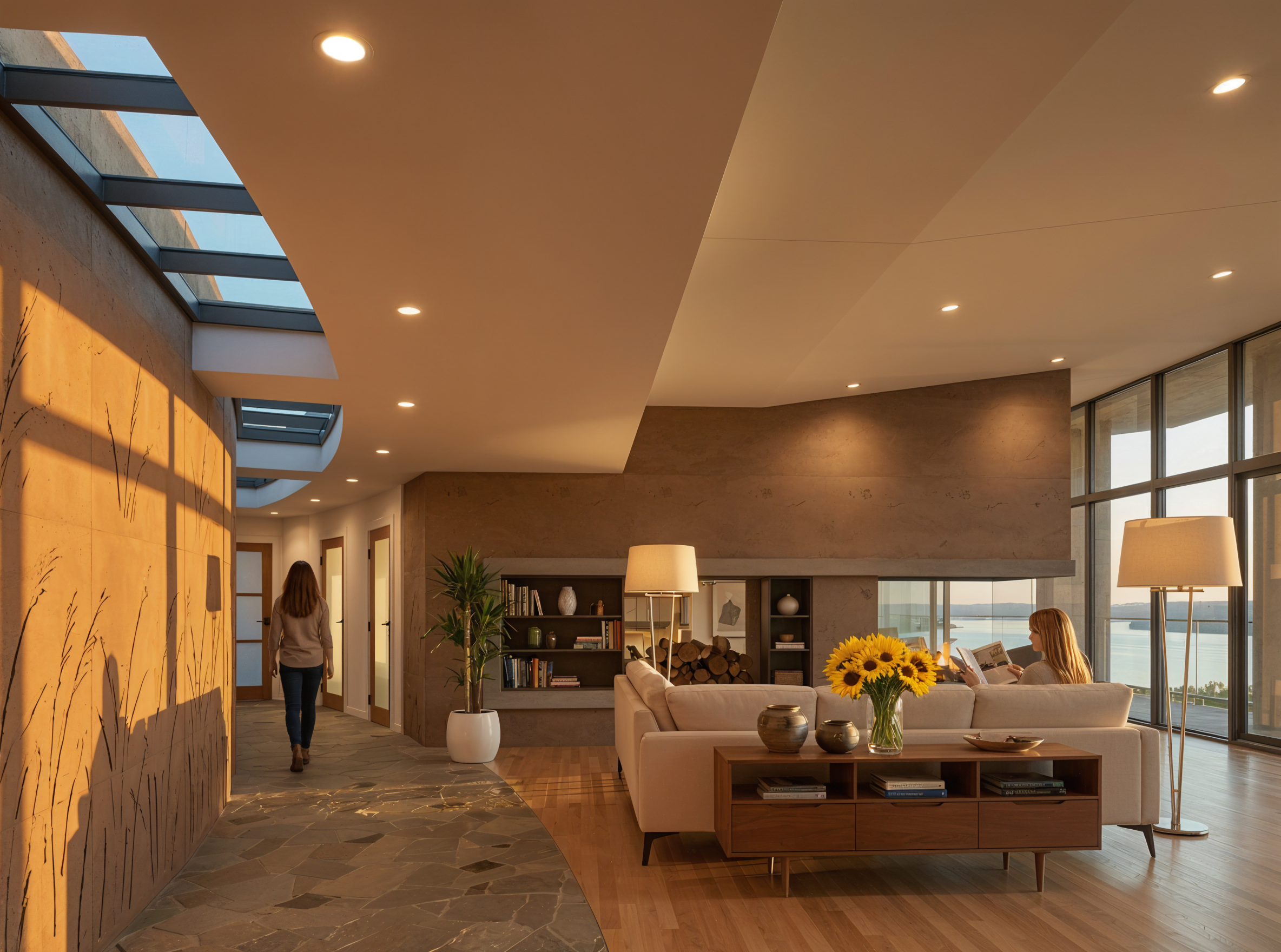
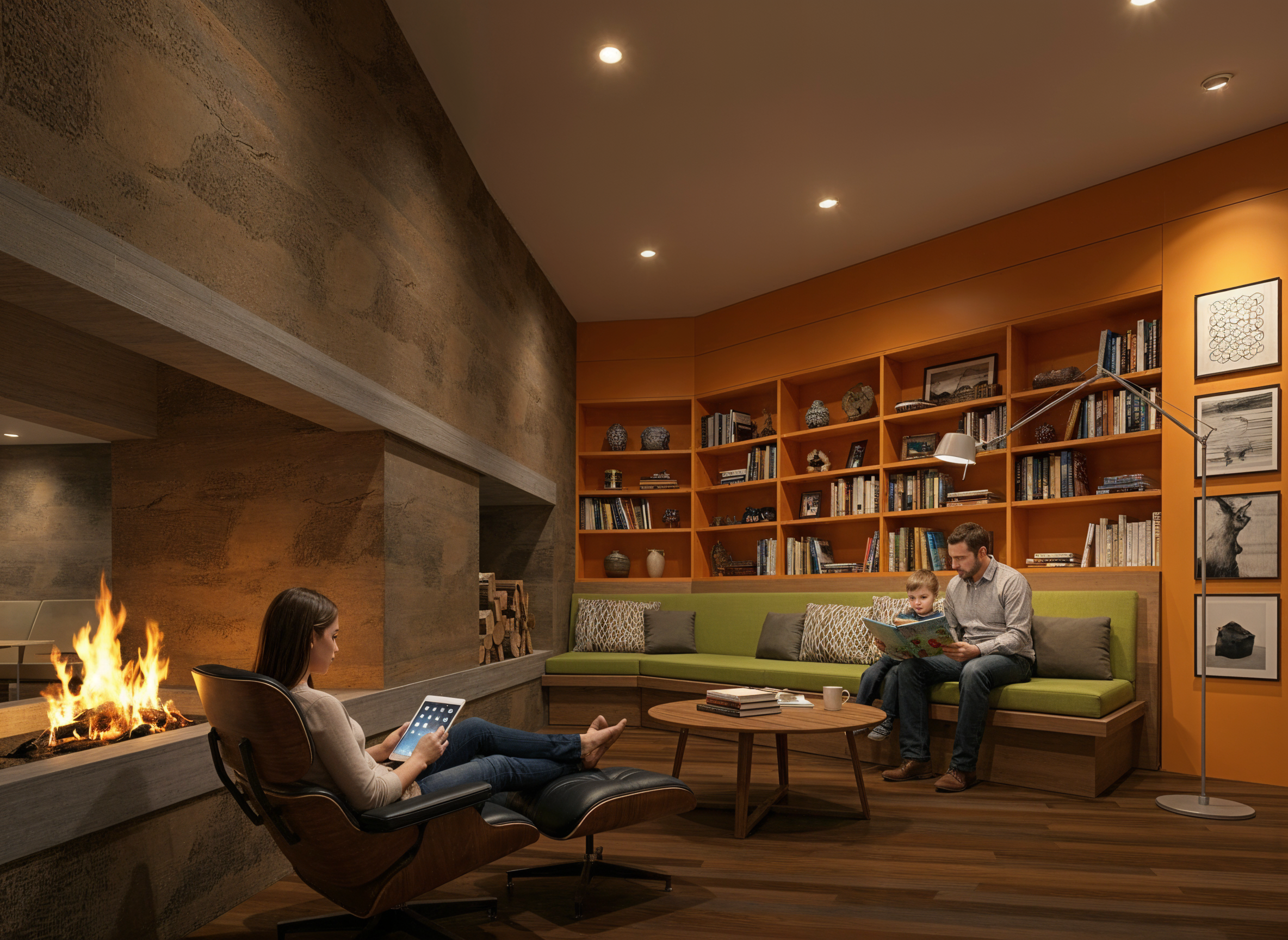
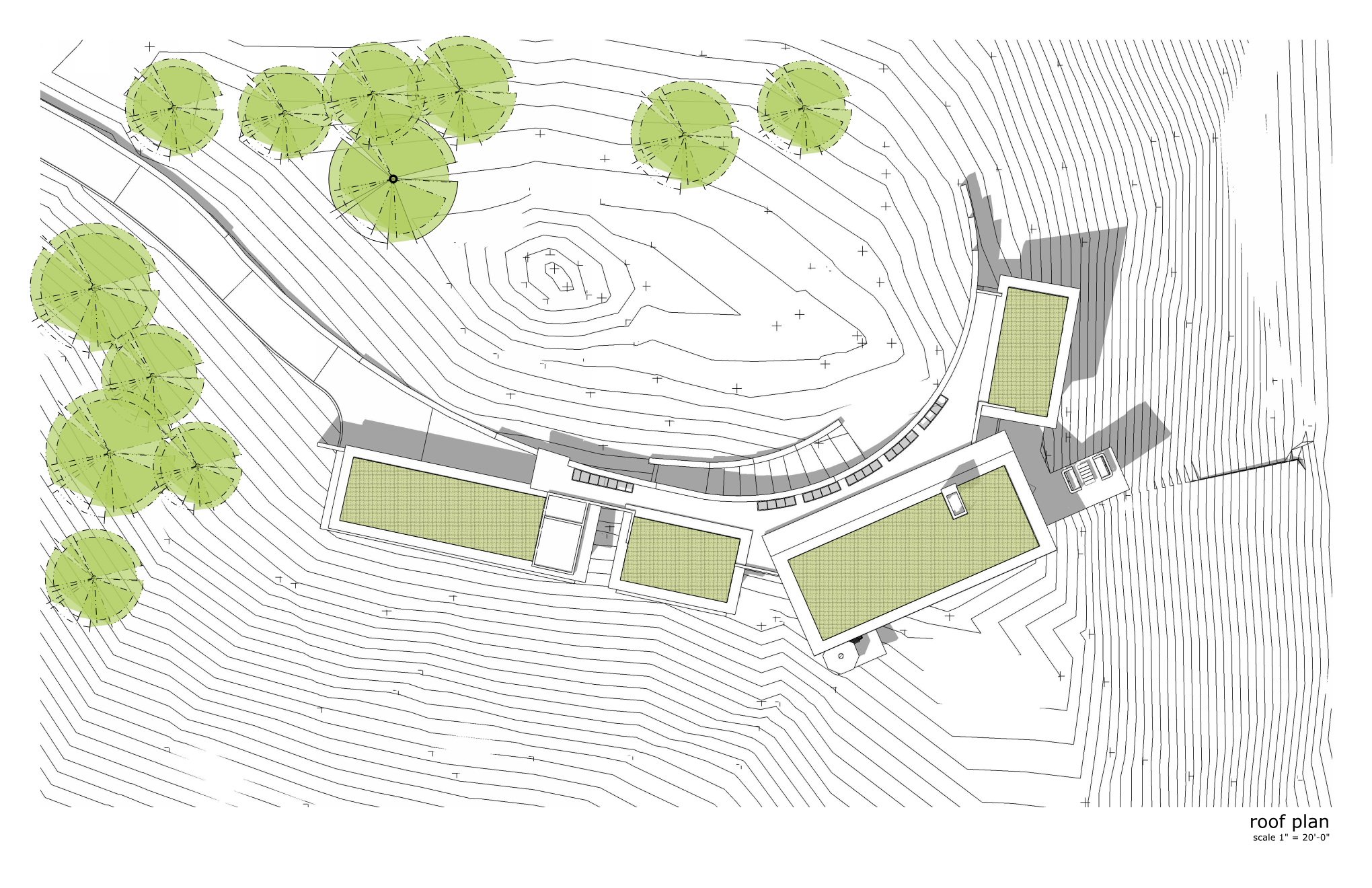
A curvilinear, site-cast concrete wall serves as the project’s central spine, marking a subtle threshold between the sacred and the secular aspects of life on the site. This spine defines the primary circulation route, connecting the entry to the living spaces and continuing on to the primary suite. Its lower ceiling height accommodates mechanical systems, allowing the main living areas to remain free of visible ducts and louvers. To further integrate the architecture into the landscape, the roofs over the living spaces are planted with native prairie grasses, providing additional insulation while visually blending the home into its surroundings.
The transition from work to retirement is not always absolute, and this was true for our clients. One partner planned to continue working remotely, requiring dedicated workspace, and their adult child would occasionally visit and need independent accommodations. These functions are located within a guest wing adjacent to the entry, offering both convenience and a sense of separation from the primary living areas of the home.
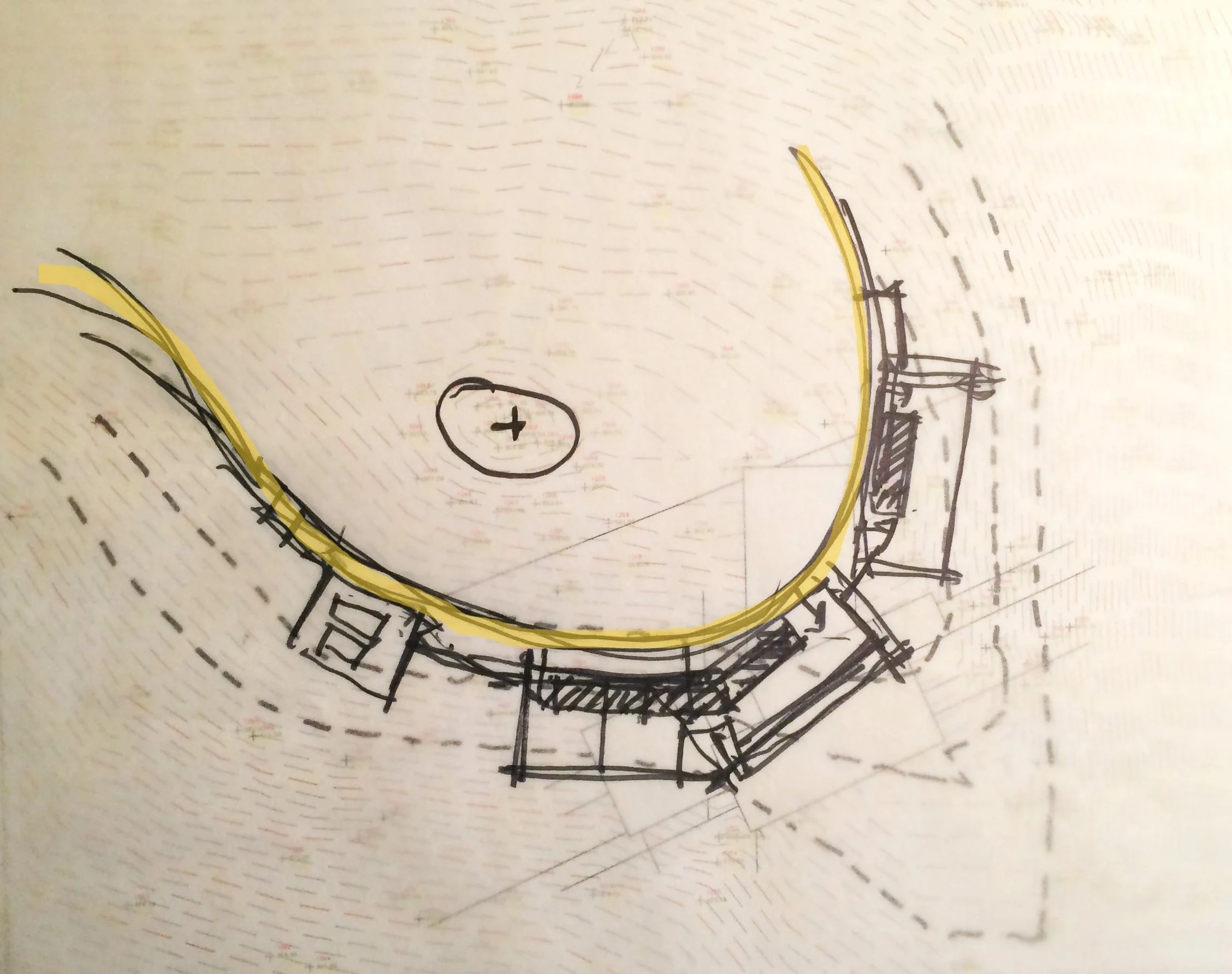
The first sketch of the house conceived of the wall separating the spiritual and physical worlds while aligning the new living spaces to appreciate why this place was so valued by indigenous people.